The drip that is meant to happen
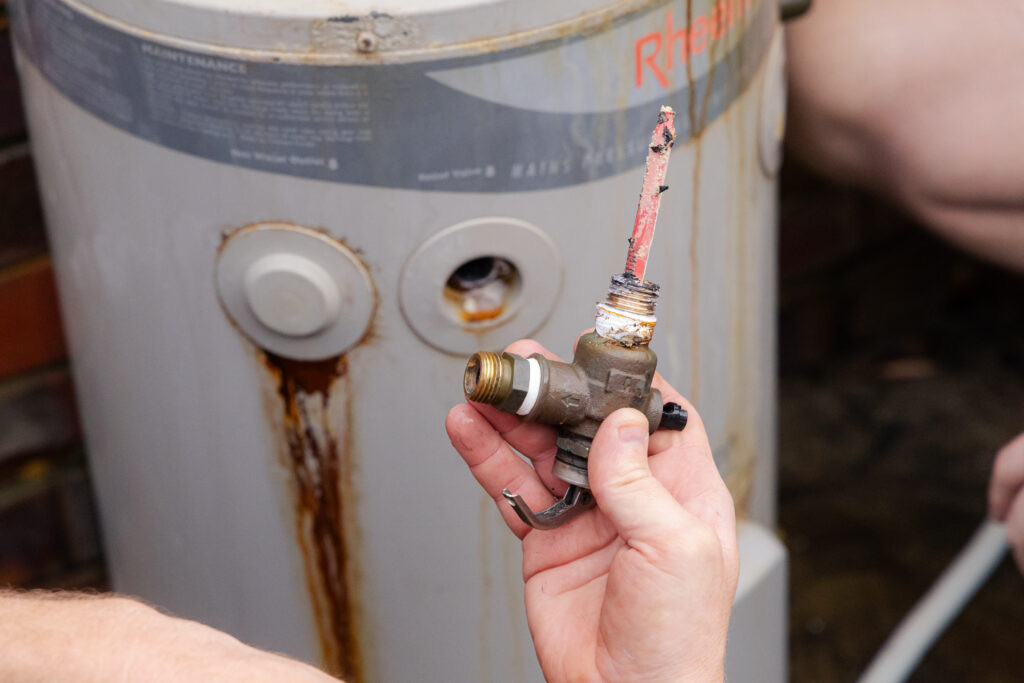
Every storage hot water system has a temperature-and-pressure relief valve, with a small pipe running from it down the wall. That valve exists to let water out.
When water heats it expands. The relief valve releases the excess so the pressure inside the tank stays safe. So a bit of water coming from that little pipe, particularly during or just after a heating cycle, is the system working exactly as designed.
What is not normal is that valve running steadily, or running all day, or a puddle that never dries out. That usually means the valve itself has failed, or the pressure feeding the system is too high — and both of those are repairs rather than replacements.
The leak that is not meant to happen
Water sitting underneath the unit is a different matter.
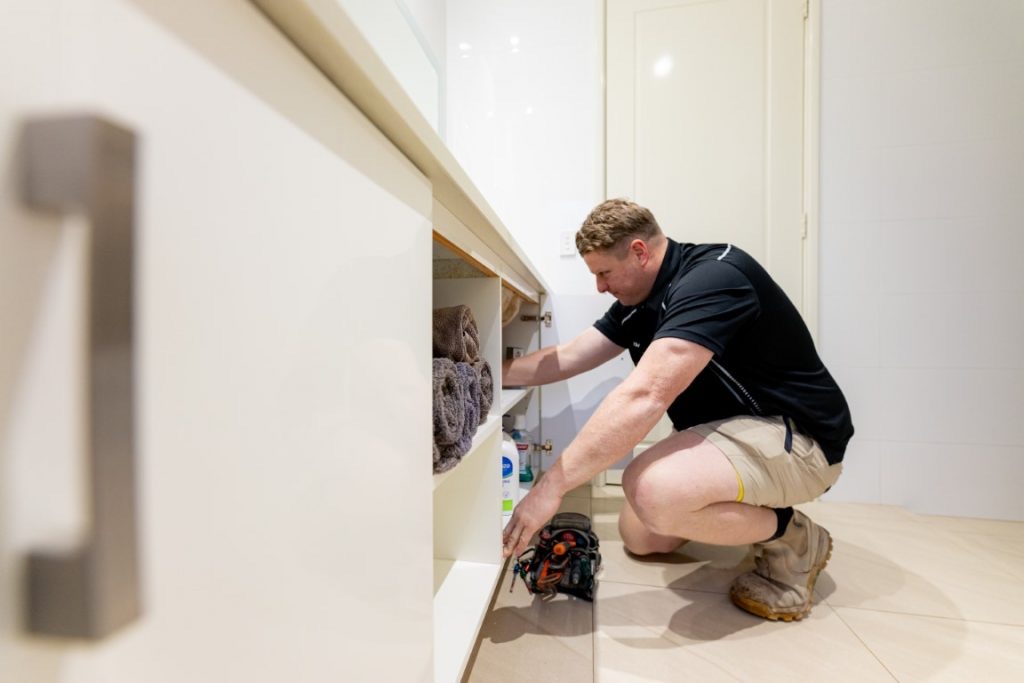
If it is coming from the base of the tank rather than from the relief pipe, the tank itself has corroded through from the inside. That cannot be repaired. Once the steel has gone, it has gone, and a replacement is the only honest answer.
The reason it matters which one you have is that they look similar from three metres away and mean completely different things — one is a valve, the other is a new system.
Why most Harrisdale units are still worth repairing
This is where Harrisdale differs from most of Perth, and it is the useful part of this page.
The suburb was gazetted in 2007 and the main Harrisdale Green estate did not start construction until July 2010. A storage hot water system generally has ten to fifteen years in it. That means a very large share of the original systems in this suburb are still inside their expected life, or only just reaching the end of it.
So when we get called to a leaking unit in Harrisdale, a repair is far more often the right answer than it would be in a suburb built in the seventies. The usual finds are:
A failed relief valve
A consumable part, and a common one.
A fitting or connection above the unit
The cold inlet, the hot outlet, or a tempering valve. Water runs down the outside of the tank and pools at the base, which is exactly what a failed tank looks like from a distance.
Excess pressure
Mains pressure higher than the system is meant to see, pushing the relief valve open constantly. The valve is not the fault here — it is the symptom.
The tank itself, occasionally
It does happen, and where it has, we will say so rather than sell you a repair that buys three months.
Whatever the answer turns out to be, you get it in writing before anything happens. We would rather do the smaller job than talk you into the larger one.
While you wait
Two things, and only if water is actively running.
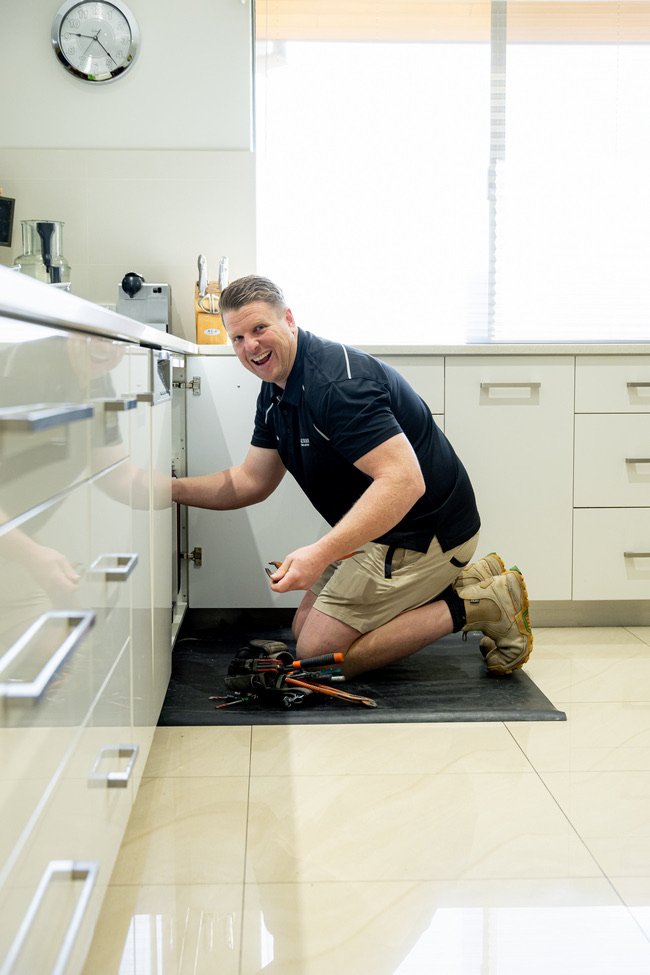
Turn off the isolation valve on the cold pipe feeding the unit. It is usually on the pipe entering the top of the tank. That stops water refilling it without cutting supply to the rest of the house.
If it is an electric unit and water is getting into anything electrical, switch it off at the switchboard. If you are not confident doing that safely, leave it and tell us when you ring.
Beyond that, leave it with us.
Can I still use the shower?
If it is a slow drip from the relief valve, generally yes — but ring us, because a valve that has started running rarely stops on its own.
If water is running from the base of the unit, or into anything electrical, stop using it and turn it off. The hot water is not worth the damage it is doing in the meantime.
What it costs
No call-out fee to come out and work out which of the above you have. A free written quote before any work starts, transparent pricing, no hidden costs, and no obligation if you would rather think about it.
Monday to Friday, 7:00am to 4:00pm. No after-hours or weekend callouts.
If it is not the hot water system
Water near a hot water unit does not always come from it. A leak in the pipework behind or beneath the unit produces exactly the same puddle, and that is a detection job rather than an appliance job. We establish which before quoting either.