If you can smell gas right now
Leave the building
Take everyone with you.
Do not touch anything electrical on the way out
No light switches, no power points, no appliances, no garage door button. A switch makes a spark.
Do not use a phone inside
Ring from outside, well away from the house.
If you can reach the gas meter safely from outside
, turn the isolation valve off. If you cannot, leave it.
Then ring us
If the smell is strong, or anyone feels unwell, ring the emergency services first. Nothing on this page is worth a delay.
Why gas is a separate trade
A plumbing licence and a gas licence are two different tickets in Western Australia, and plenty of people hold the first without the second. Gas work done by someone without the second is illegal, uninsured and uncertified, and you generally find that out at the worst possible moment.
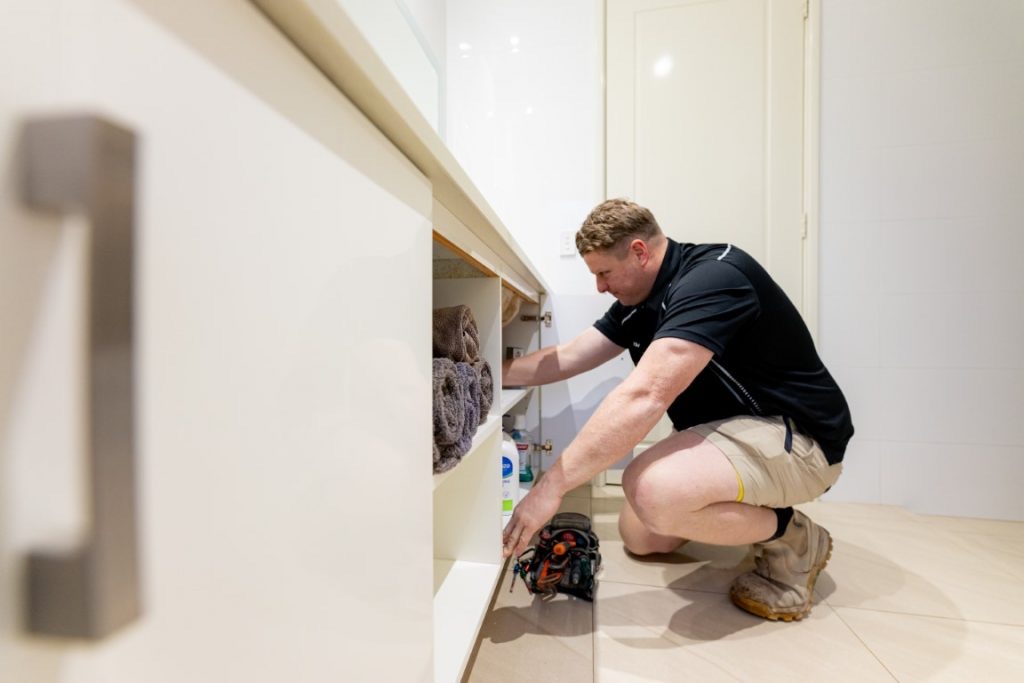
Tim holds both — plumbing licence 8396 and gas licence 13098 — and does the gas work himself rather than passing it to somebody else.
How a gas leak is actually found
Water leaks and gas leaks are located completely differently. Water gives you a meter that moves and a noise that carries through the ground. Gas gives you neither, and a nose is not evidence.
The pressure test is the proof
The gas installation is isolated at the meter and put under test pressure, then left. Gas is compressible, so the test has to be held for a defined period rather than glanced at — a line that holds pressure for a minute can still be leaking. If the pressure drops over the test period, there is a leak in that section. If it holds, there is not.
Then the installation is divided
Isolating appliances and sections one at a time, retesting each, narrows the leak to a single run or a single appliance connection. This is the same elimination logic we use on water, done with pressure instead of sound.
Then it is pinpointed
Electronic detection and leak-detection solution at joints and fittings find the exact point once the section is known.
Then it is repaired, and the whole installation is retested
Not just the bit that was fixed. A gas installation is signed off as a whole or not at all.
What we find in Harrisdale
Harrisdale is new. The suburb was gazetted in 2007 and the main estate did not start construction until July 2010, so gas installations here are original and well within their life. We are not finding the perished old runs you get in a suburb built decades earlier.
What does turn up:
Appliance connections
The flexible connection behind a cooktop or to a heater, and the fittings at each end of it. The most common find by a distance.
Fittings disturbed by later work
A kitchen renovation, a new cooktop, a heater installed or removed. Anything that touched the gas after the house was built.
Runs to outdoor kitchens and alfresco areas
Extremely common on Harrisdale blocks, frequently added after handover, and buried or built into the structure.
Hot water unit connections
Where the gas meets the appliance, and where a leak sometimes gets blamed on the appliance itself. Leaking hot water systems
One thing worth knowing: not every property in this area has a gas connection. Parts of the newer estates through Harrisdale and Piara Waters went in all-electric. If your home has no gas, this page is not your problem — which is worth establishing before anybody starts looking.
The paperwork that has to follow
This is the part people do not think about until they need it.
Gas work in Western Australia has to be carried out by a licensed gas fitter, and the work has to be certified. You should be left with documentation for the work that was done, issued against the licence of the person who did it.
That certificate is what your insurer will ask for if anything ever goes wrong, and it is what a settlement agent or a buyer's inspector will look for if you sell. Work done by an unlicensed person cannot be certified, which means as far as an insurer is concerned it may as well not have been done.
Our gas licence is 13098, held by the person who carries out the work.
What it costs
No call-out fee. A free written quote before any work starts, with transparent pricing and no hidden costs. If you decide not to go ahead, you owe nothing.
Monday to Friday, 7:00am to 4:00pm. We do not run after-hours or weekend callouts — so if you can smell gas outside those hours, get out of the house and ring the emergency services rather than waiting for us.
Water leak detection · Emergency plumbing · Get a free quote